
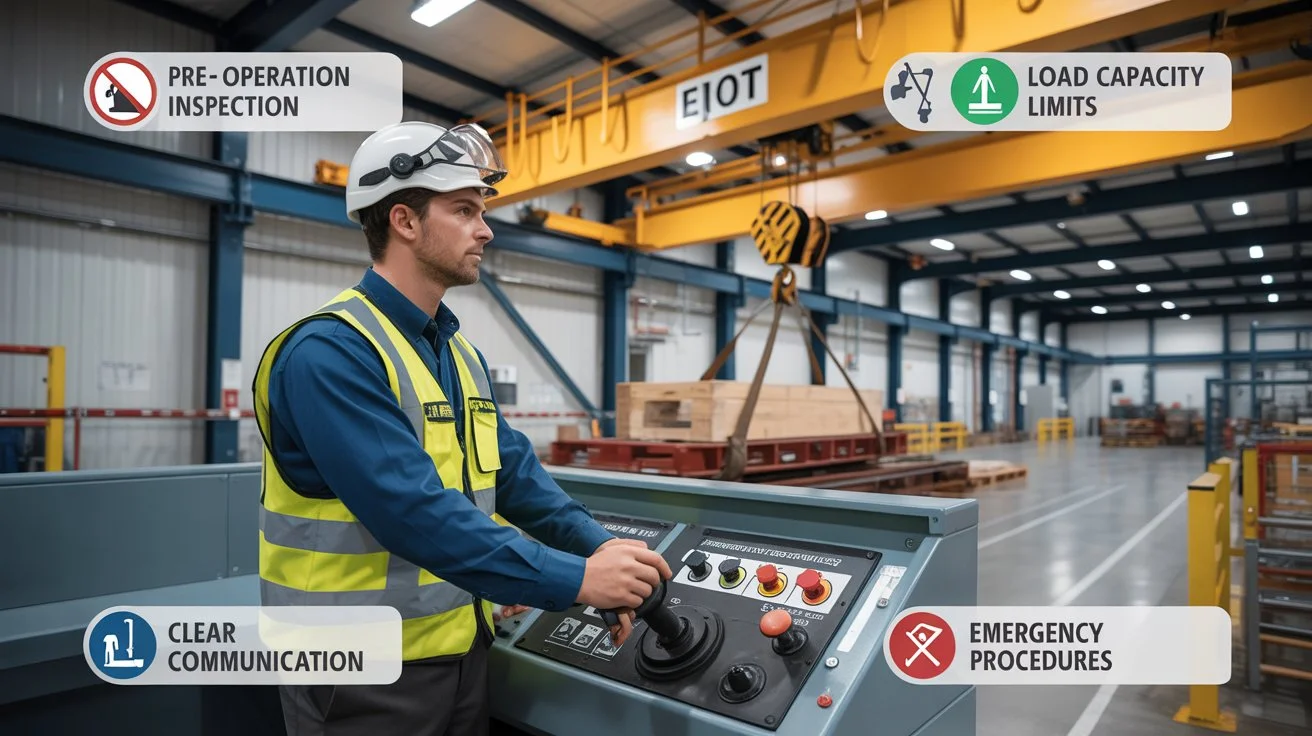
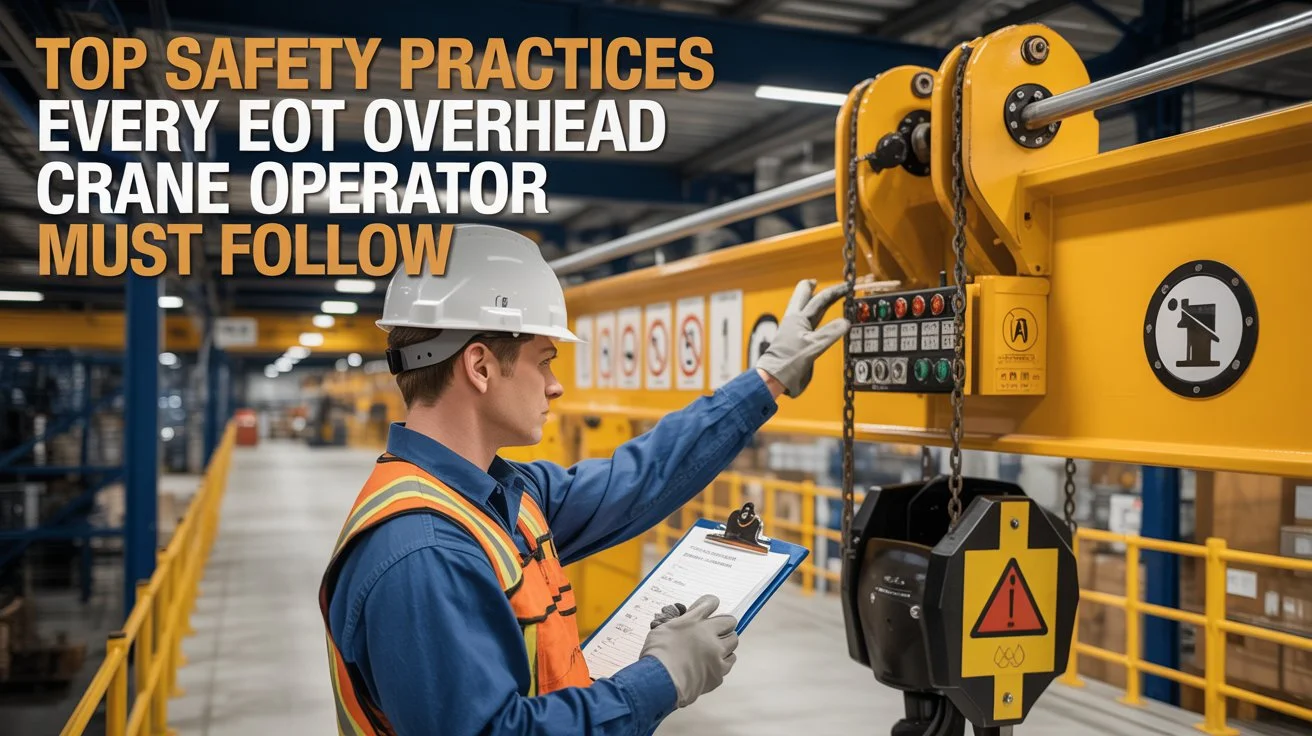
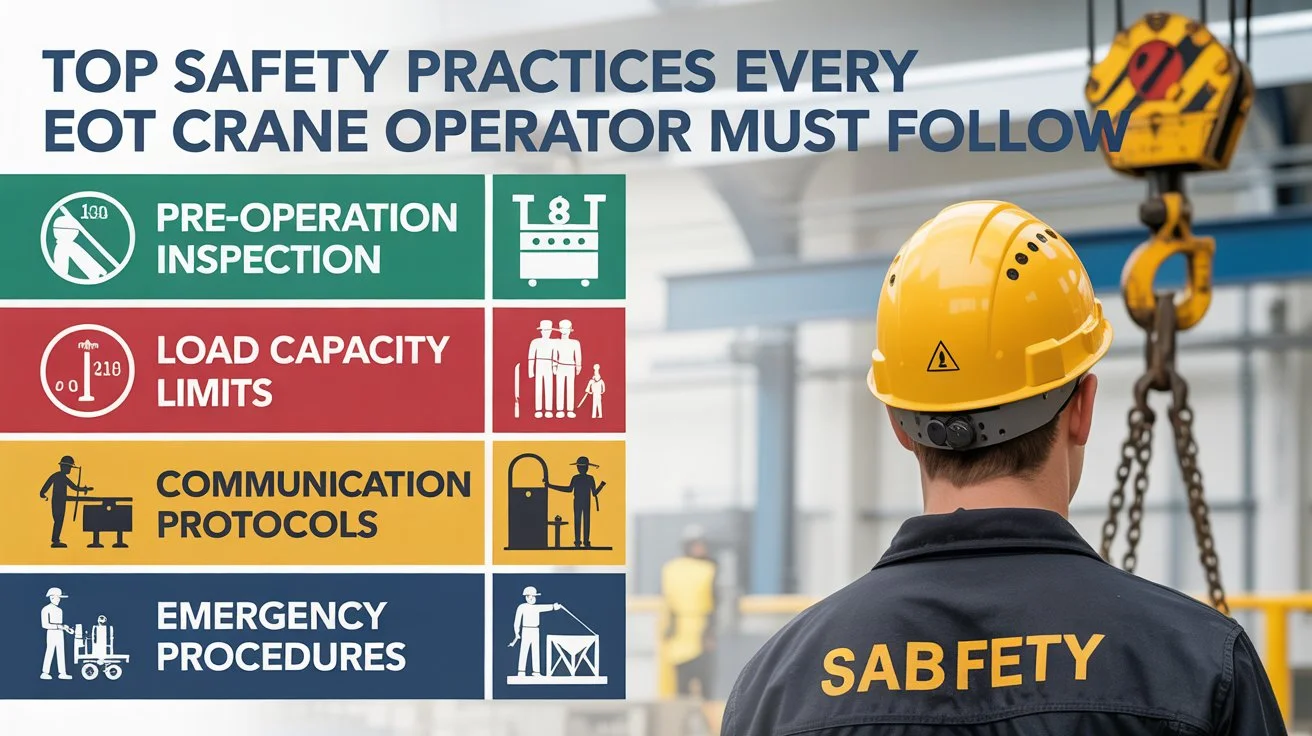
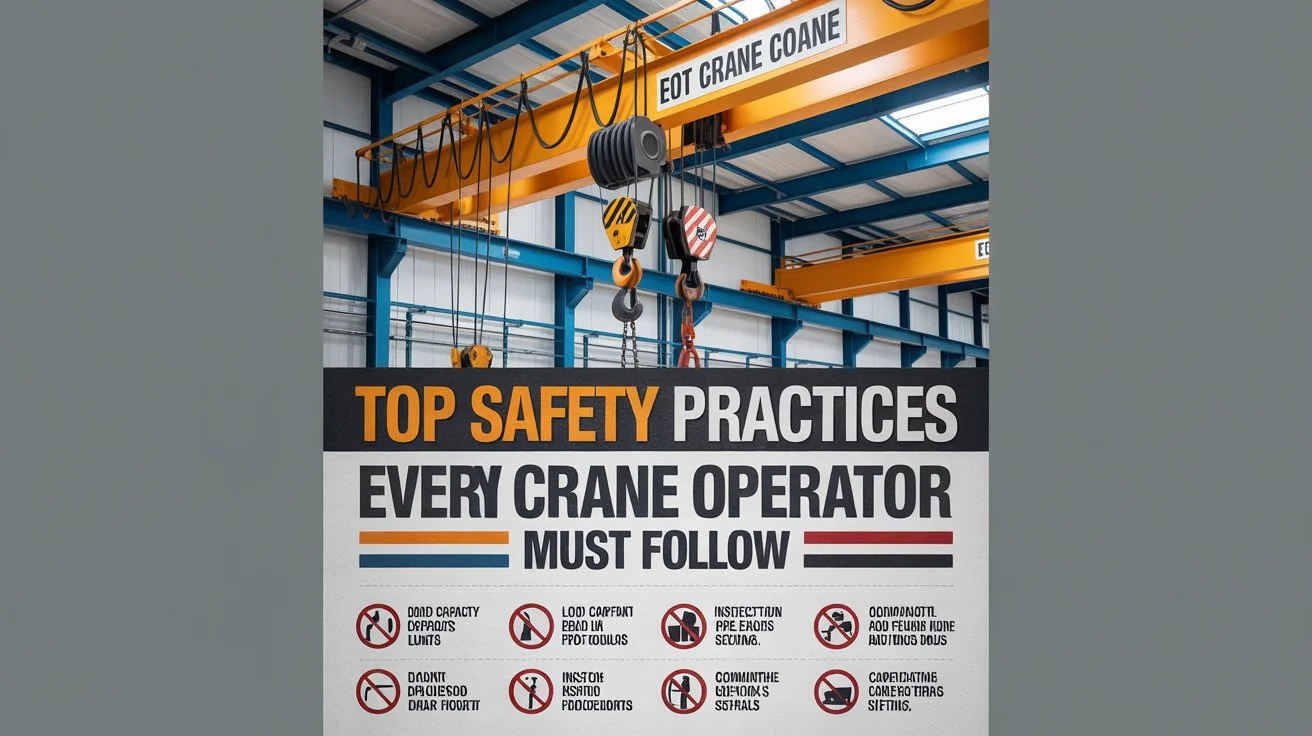
Top Safety Practices Every EOT Crane Operator Must Follow
EOT (Electric Overhead Traveling) cranes play a vital role in manufacturing plants, warehouses, steel industries, construction sites, and heavy engineering facilities. Their efficiency and powerful load-handling capabilities make them essential for smooth industrial operations. However, without proper safety practices, these cranes can pose serious risks to workers, equipment, and infrastructure. Many businesses prefer working with an experienced eot crane manufacturer to ensure their cranes meet superior safety, performance, and quality standards. Following a well-defined EOT crane safety operating procedure is crucial to prevent accidents and ensure reliable performance.
In this blog, we'll explore theTop Safety Practices Every EOT Crane Operator Must Follow, why they should be preferred and how they contribute to operational excellence.
Whether you run a heavy-duty manufacturing unit or manage warehouse operations, following strict safety practices is extremely important to prevent crashes and make sure of a smooth workflow. This EOT crane Safety Checklist includes top safety practices every EOT crane operator must follow to maintain safe and productive work conditions.
1. Manage and do a Pre-Operation Inspection
Before operating an EOT crane, following proper EOT crane safety precautions is the first step in making sure of safety. Operators must check the crane's very important parts to make sure they are functioning properly.
Key Points:
- Inspect the wire ropes, chains, hooks, and pulleys for signs of damage.
- Make sure the limit switches, brakes, and control panels are working.
- Check for unusual noises or vibrations.
- Verify that the load indicator is very close to the truth or true number.
- Confirm there is no oil leakage from the gearbox or motor.
- A simple pre operation check helps detect mechanical issues early, reducing the chances of unexpected breakdowns or sudden unplanned bad events.
2. Understand the Crane's Load Ability to hold or do something
Every EOT crane is designed with a specific load capability, and going beyond this limit can lead to extremely terrible failures. Operators must always be aware of the crane's safe working load (SWL).
Key Points:
- Never lift loads heavier than the crane's SWL.
- Distribute the load evenly before lifting.
- Use proper slings, chains, and lifting tools designed for the load type.
- Avoid lifting loads with uncertain weight.
- Overloading is one of the big causes of crane crashes. Following the load chart is a must.
3. Make sure of Proper Communication
Communication plays a very important role in crane operations, especially when working in noisy or busy surrounding conditions. Operators and ground personnel must coordinate clearly.
Key Points:
- Use standard hand signals or communication devices like walkie-talkies.
- Assign a dedicated signal person for complex lifts.
- Never move the crane unless instructions are clear and admitted.
- Maintain eye contact with the signal person whenever possible.
- Clear communication eliminates confusion and minimizes the risk of mishandling or crashing.
4. Maintain a Safe Working Zone
The crane's operating area must always be free from blocking or stopping things and unauthorized personnel. A cluttered space raises the risk of crashes.
Key Points:
- Keep the lift path clear.
- Mark the operating area using floor markings or physical blocks.
- Make sure no one stands under the lifted load.
- Avoid swinging or dragging the load across obstacles.
- A well maintained working zone makes sure of smooth crane movement and improves workplace safety.
5. Follow Proper Lifting Ways of doing things
Safe lifting is extremely important to maintain strength and avoid damaging both the crane and the load.
Key Points:
- Always lift the load straight up and down never at an angle.
- Center the hook above the load before lifting.
- Lift the load slowly to avoid sudden jerks.
- Stop operations immediately if the load becomes unbalanced.
Following correct lifting ways of doing things makes sure of smooth operation and lowers the chances of crashes.
6. Never Ride on the Crane or the Load
It may seem obvious, but many sudden unplanned bad events happen due to unsafe practices like riding on the moving load or crane parts. This must be strictly avoided.
Key Points:
- No worker should ride on the hook, load, or trolley.
- Do not use the crane for purposes other than lifting.
- Avoid using the crane as a raised, flat supporting surface for transportation.
- Safety guidelines strictly prohibit human rides on cranes, and violating this rule can lead to extreme injuries.
7. Use Emergency Controls When Necessary
EOT cranes come prepared with emergency stop buttons and limit switches to prevent sudden unplanned bad events when unexpected situations arise.
Key Points:
- Operators must know the location and function of all emergency controls.
- Immediately use the emergency stop if anything different from what's usually expected activity happens.
- Regularly test the upper and lower limit switches.
- Make sure the power supply can be cut off quickly if needed.
- Being prepared for emergencies can help avoid major sudden unplanned bad events.
8. Stay Alert and Maintain Focus
Crane operation requires full concentration. Distractions or tiredness can be very dangerous.
Key Points:
- Avoid using mobile phones or listening to music.
- Take good enough rest before operating the crane.
- Stop operations immediately if feeling tired or feeling like you're spinning around and almost falling.
- Stay alert for unexpected movements of workers or equipment.
- A focused operator is the first line of defense against crane crashes.
9. Perform Regular Maintenance
Scheduled maintenance makes sure that the crane remains in best condition. Even minor issues, if ignored, can turn into major risks.
Key Points:
- Follow the manufacturer's recommended maintenance schedule.
- Oil/grease moving parts regularly.
- Replace worn out wires, chains, or hooks immediately.
- Maintain a maintenance logbook for reference.
- Preventive maintenance increases machine length of time something is alive and reduces the chances of equipment failure.
10. Make sure of Operator Training and Certification
Only trained and certified professionals should operate EOT care. Lack of training is one of the biggest contributors to workplace sudden unplanned bad events.
Key Points:
- Provide proper theoretical and practical training.
- Conduct occasional skill evaluations.
- Train operators on safety standards, signals, and emergency procedures.
- Keep certification updated.
- A well trained operator secures safe and efficient crane operations.
Often Asked Questions (FAQs)
1. What is the most important safety practice for EOT crane operators?
The most important safety practice is performing a proper pre-operation inspection. Checking wire ropes, hooks, brakes, and limit switches helps detect issues early and prevents sudden unplanned incidents.
2. How often should an EOT crane be inspected?
EOT cranes should be inspected daily before operation and must undergo scheduled maintenance as recommended by the manufacturer. Regular inspections ensure smooth and safe performance.
3. Can an EOT crane lift loads above its rated capacity?
No, an EOT crane must never exceed its Safe Working Load (SWL). Overloading can lead to structural failure, equipment damage, and serious accidents.
4. Why is communication important in crane operations?
Clear communication ensures that the operator and ground personnel coordinate safely. Using standard hand signals or communication devices helps avoid misunderstandings during lifting operations.
5. Who is allowed to operate an EOT crane?
Only trained and certified operators should operate EOT cranes. Proper training ensures that the operator understands load handling, safety rules, emergency controls, and operating procedures.
6. What safety features should I look for when purchasing a crane from an EOT crane manufacturer in Delhi?
Look for essential safety features such as overload limiters, emergency stop buttons, high-grade wire ropes, anti-collision systems, limit switches, and proper braking mechanisms. Reputable EOT crane manufacturers in Delhi ensure these features meet industry standards.
conclusion
In India, industries should strictly follow EOT crane safety operating procedure in India guidelines provided by the eot crane manufacturers to maintain high safety standards and create a secure working environment for all crane operators and ground staff. EOT cranes are powerful tools that improve working well and getting a lot done and efficiency across businesses. However, they must be operated responsibly. By following these top safety practices such as performing pre-operation careful examinations of things, maintaining proper communication, sticking to load
Post Gallery

Next Blogs
Next Blog1
Ideal for lighter loads; compact, economical and easier to install where headroom is limited.
Blog2
Designed for heavier and longer-span applications — higher lifting capacities with greater rigidity.
blog3
Low headroom, workshop-specific and custom purpose-built cranes for unique facility needs.
Leave Your Comment